
Fungal Nail Treatment

What are fungal nails?
A fungal nail infection often occurs from the overgrowth of fungi in or around the nail. Over time the nail will become thickened, discoloured and likely be both painful and embarrasing for many people. The condition can often start as an undiagnosed skin fungi/athletes foot. It can then appear on the nail as a small white or yellow growth beneath the tip, overtime it will deteriorate without an intervention.
Fungal nail infections are commonly found in people aged over 55 years old and regular users of communal showers, gyms and swimming pools. They’re breeding grounds for toenail fungus, as there damp and humid environments allow for the growth of bacteria.
What should I do if I suspect a fungal nail infection?
If you suspect you have a fungal nail, you should seek professional advice from a podiatrist, the sooner the damage/infection can be diagnosed the easier an intervention can be put in place for a quicker chance of resolution.
Podiatry treatments for fungal nails
There are a range of treatments available for fungal nails, generally it is dependant on the severity of the infection and the factors following the assessment.
Nail treatment interventions can take anything from 3-18 months for an infection to fully clear. This is because all antifungal treatments stop further growth of the fungus allowing healthy regrowth of a nail. Toenails also grow at about half the rate fingernails grow!
Maintenance
It is important to emphasis that for certain patients, managing a severe fungal infection—rather than fully eliminating it—may be the most appropriate treatment approach. Trimming and reducing the nails manually or with a drill can greatly improve patient comfort. This is a simple, low-risk intervention, especially when a full cure could require more invasive treatment.
Nail paint/lacquers
Antifungal nail lacquers can be effective for mild to moderate fungal nail infections. There are several topical treatment options available, and a podiatrist can advise you on the most appropriate choice. These treatments must be continued until the infected portion of the nail has completely grown out. A full foot assessment is also essential, as any underlying skin conditions that contribute to nail infections must be addressed as well.

Simple Effective Treatment for Fungal Nails
Lacuna Method
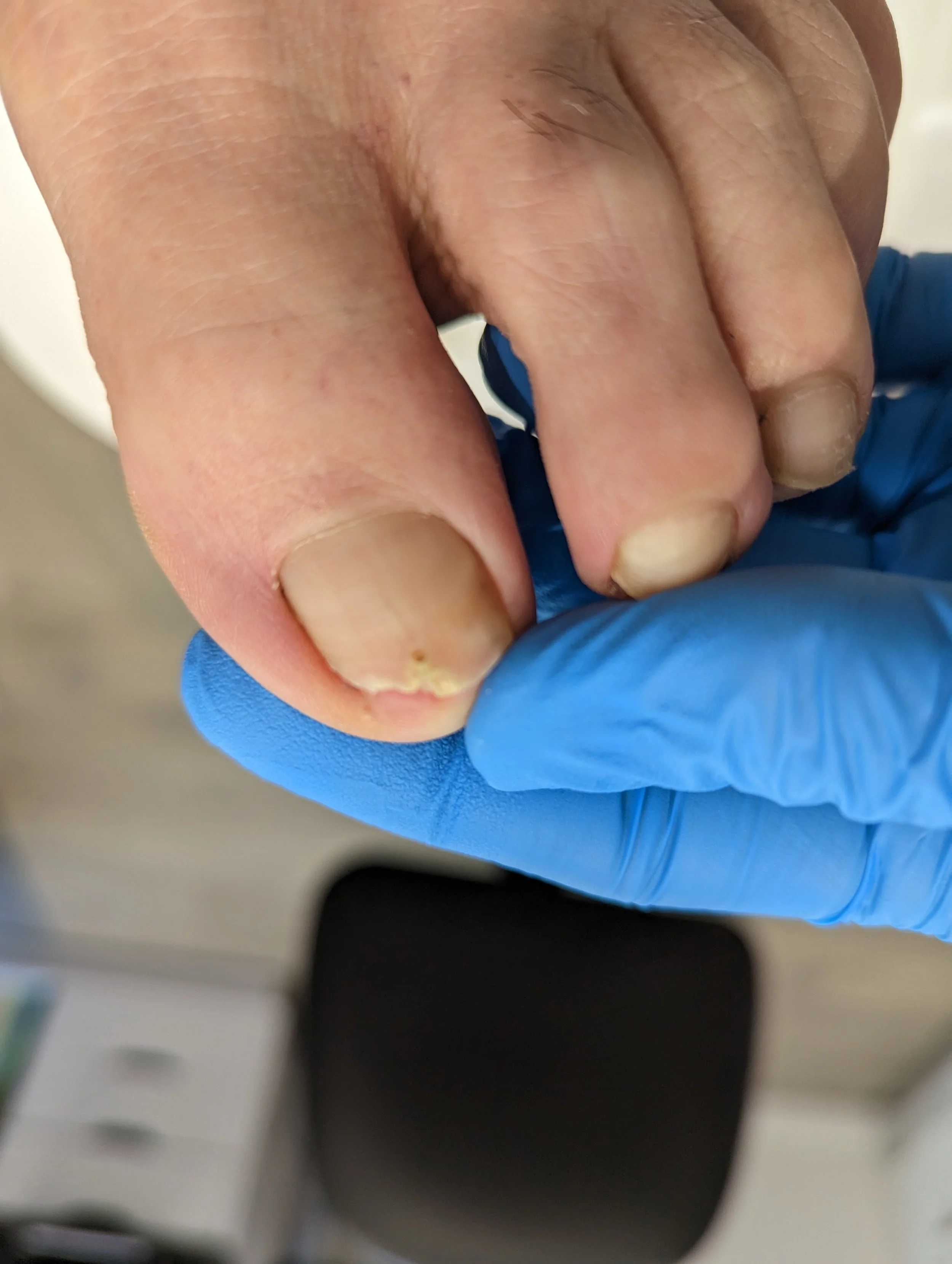
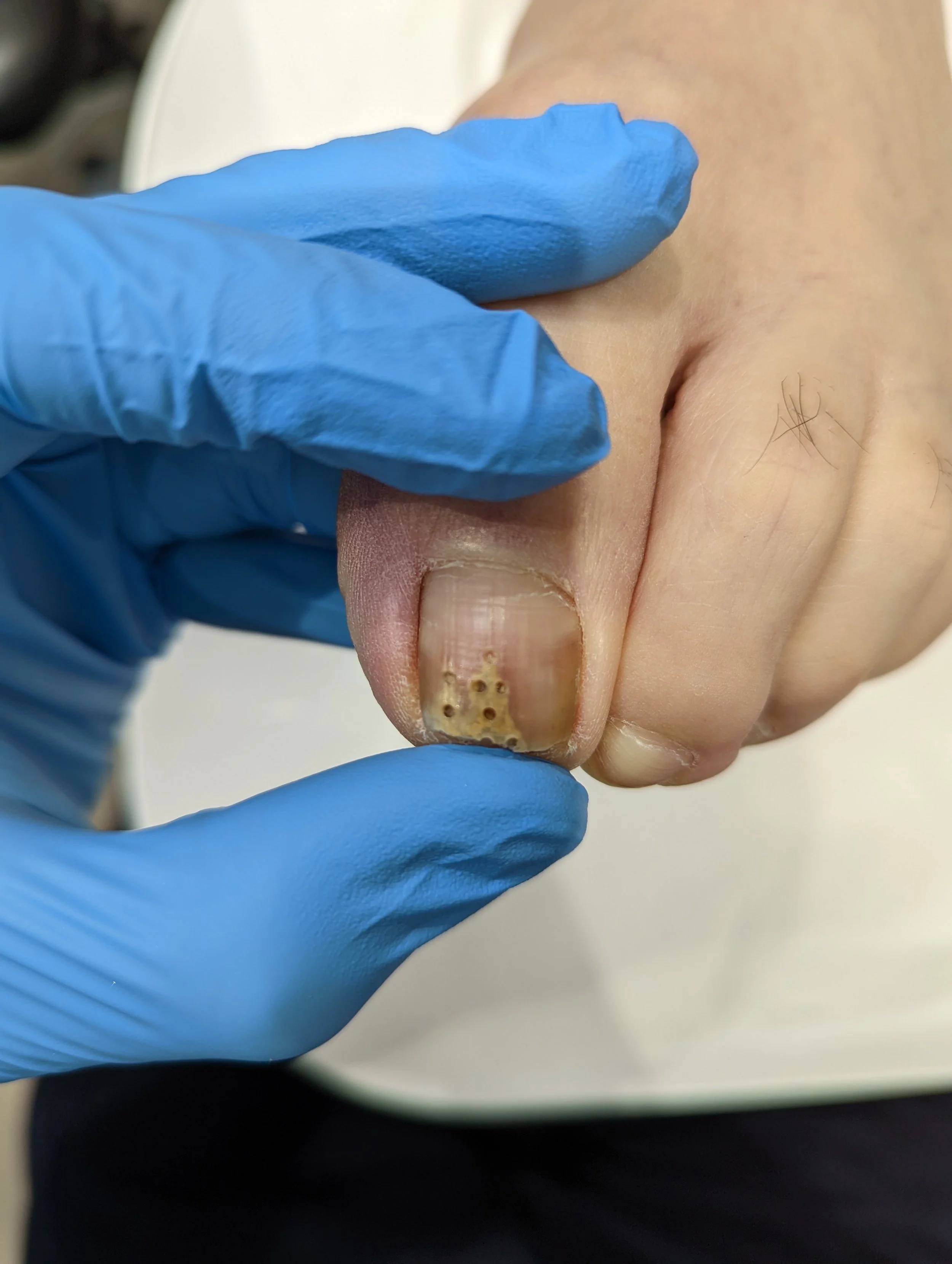
The Lacuna Method, or nail fenestration, involves drilling tiny micro-holes into the nail plate to allow topical antifungal treatments to reach the nail bed more effectively. This technique is suitable for mild to moderate infections where there is minimal thickening of the nail plate. The images below demonstrate this method of treatment.

Total nail removal
If a fungal nail is causing discomfort, nail surgery may be recommended to either permanently remove the nail or remove and clean it so it can regrow in a healthier state.
After a full assessment, your podiatrist will advise you on the most appropriate and beneficial treatment options. You will also receive guidance on maintaining healthy feet and reducing the risk of future fungal skin or nail infections. Once someone has developed a fungal infection, they are generally more susceptible to recurrence, so ongoing care and maintenance are essential.
If you have a concern with your foot or lower limb and are unsure whether podiatry can help, please feel free to contact us.
Book an appointment or call 01202 721417 to speak to a knowledgeable health care professional.